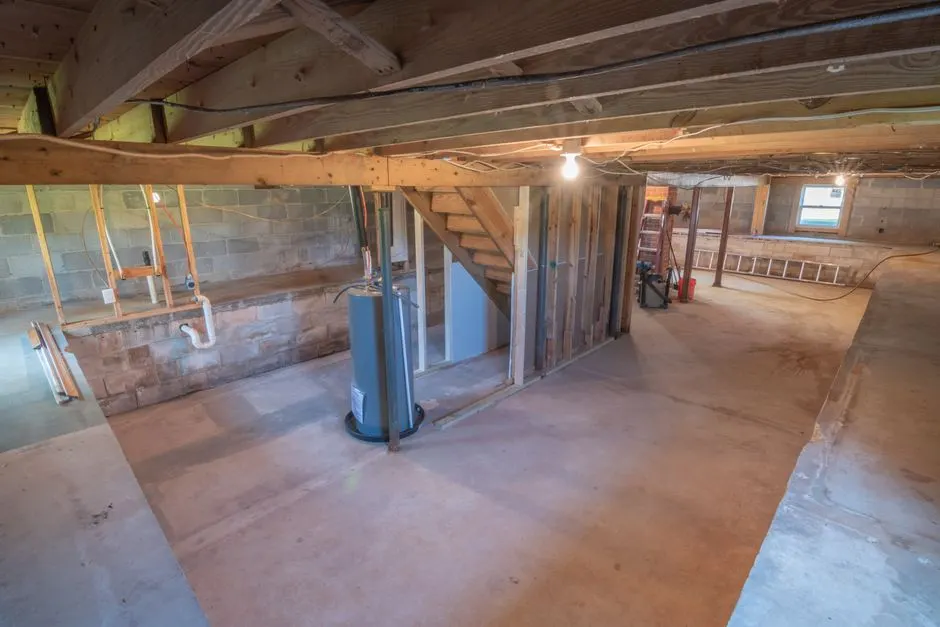
Spring snowmelt flooding preparation for Ketchum crawl space in California comes down to three things: moving surface water away from the foundation, sealing the space against ground moisture, and having a pump ready before the first warm week hits. In Ketchum, the thaw usually starts in late March and peaks in April, and a single acre-foot of melting snow releases about 326,000 gallons of water - much of it looking for the lowest point on your property, which is almost always your crawl space. This post covers why snowmelt behaves differently than rain, what to fix before the thaw, how much 2026 waterproofing and sump pump work costs in this area, and when it's time to bring in a crew.
Why snowmelt hits Ketchum crawl spaces harder than rain
Snowmelt delivers water slowly and relentlessly for weeks, which is the opposite of how a summer thunderstorm behaves. A storm dumps an inch in an hour and it runs off. A snowpack sitting at 4,000 to 6,000 feet releases that same inch every day for 20 to 40 days straight, and the ground underneath is still frozen for the first two weeks of it.
Frozen soil can't absorb anything. So the meltwater sheets across the surface, finds the foundation, and follows the path of least resistance - which is the seam where your footing meets the stem wall. If you've ever pulled up a crawl space access panel in mid-April and found two inches of standing water with no rain in the forecast, that's the mechanism.
Ketchum sits in a bowl. Warm Springs, River Run, and the older streets near Sun Valley Downtown all drain toward the valley floor, and homes built before 1990 were often graded with the assumption that snow would stay put until June. It doesn't anymore. We see the same pattern every year across Water Damage Restoration in Ketchum: dry crawl spaces in February, four inches of water by the second week of April.
What causes crawl space flooding during snowmelt in Ketchum California?
Crawl space flooding during snowmelt in Ketchum California is caused by four things, and most flooded crawl spaces have at least two of them working together:
- Poor grading. Soil that slopes toward the house instead of away from it. The standard is a 6-inch drop over the first 10 feet. Most Ketchum lots we inspect have 1 to 2 inches, or the slope reverses entirely after a winter of frost heave.
- Clogged or missing gutters. A single downspout discharging 18 inches from the foundation dumps roughly 12 gallons per minute during a heavy melt. That water lands exactly where you don't want it.
- Hydrostatic pressure. When the water table rises in April, groundwater pushes up through the footing drain, the sump pit, or a cold joint in the slab. This is the one that surprises homeowners, because there's no visible entry point.
- Failed vapor barrier. A 6-mil poly sheet that's torn, unsealed at the seams, or missing entirely lets ground moisture evaporate straight into the crawl space. You don't get standing water - you get 85% relative humidity and condensation on the joists.
The fourth one is the quiet killer. Standing water gets noticed. High humidity doesn't, until the subfloor starts to cup and you smell that musty, wet-basement odor drifting up through the floor registers in June.
How to prepare your crawl space for snowmelt in Ketchum California
How to prepare your crawl space for snowmelt in Ketchum California starts with a walk-around in late fall, before the ground freezes and before the snowpack builds. Here's the order we work in, and it's the order that matters - fixing the vapor barrier before you fix the grading just means you'll be fixing the vapor barrier again in May.
1. Fix the grade and the downspouts first
Add clean fill against the foundation so the soil drops 6 inches over the first 10 feet. Extend every downspout at least 6 feet from the wall, and 10 feet if your lot slopes toward the house. This is the cheapest work on the list and it prevents more water than everything else combined.
2. Clear the foundation drain and the window wells
If your home has a perimeter drain, have it jetted before the ground freezes. A drain that's 70% clogged with silt and roots will back up the first week of the thaw and push water under the footing instead of away from it. Window wells need gravel at the bottom and a clear path to daylight.
3. Inspect and reseal the vapor barrier
You want a minimum 10-mil reinforced poly, overlapped 12 inches at the seams, taped, and run 6 inches up the stem wall with a termination bar. Anything thinner tears when you crawl across it. If your barrier is 6-mil and more than 10 years old, replace it.
4. Check the sump pit before you need it
Pour 5 gallons of water into the pit and time how long the pump takes to clear it. If it runs longer than 30 seconds or cycles more than twice, the impeller is worn or the discharge line is partially blocked. Test it in February, not in April when the pit is already full.
5. Seal the access hatch
An unsealed crawl space hatch is a 2-foot-by-3-foot hole in your building envelope. Weatherstrip it, insulate the back, and make sure it latches tight. Cold air pouring in through an open hatch condenses on warm ductwork and drips onto the floor all winter.
Crawl space waterproofing Ketchum: what actually works
Crawl space waterproofing Ketchum homeowners actually need is a system, not a single product. Interior drainage plus a sealed barrier plus a pump handles 95% of the snowmelt scenarios we see. Exterior waterproofing membranes are great when you're already excavating for a foundation repair, but digging up a finished landscape to install one rarely pencils out on its own.
Here's what a proper system includes, and what it costs in 2026 pricing for this area:
- Interior perimeter drain (footer drain): $2,800 to $5,500 for a typical 1,200-square-foot crawl space, including the gravel bed and discharge to daylight or a sump.
- 10-mil encapsulated vapor barrier: $1,800 to $3,600 installed, depending on ceiling height and how much ductwork and plumbing you have to work around.
- Sump pump with battery backup: $1,200 to $2,400 installed, including the pit, liner, check valve, and dedicated GFCI circuit.
- Dehumidifier sized for the space: $1,400 to $2,600 installed, typically a 70-pint unit with a condensate line running to the sump.
That's $7,200 to $14,100 for a full system. It sounds like a lot until you compare it to the alternative: replacing a rotted subfloor, joists, and insulation after two wet springs runs $18,000 to $40,000, and that's before mold. If you're already dealing with moisture issues, our water damage mitigation in Sun Valley, California crew handles the drying and structural assessment side of it.
Crawl space sump pump installation Ketchum California
Crawl space sump pump installation Ketchum California requires a pump sized for the inflow rate, not the square footage - and those are two very different numbers. During peak melt, a 1,200-square-foot crawl space on a sloped lot can take on 15 to 25 gallons per minute. A 1/3-horsepower pump moves about 30 GPM at 10 feet of head. A 1/4-horsepower moves 18. If your discharge line runs 40 feet uphill to daylight, you need the bigger pump.
Three details separate a pump that lasts 10 years from one that dies in 18 months:
- Battery backup with a separate float. Spring storms knock out power, and a snowmelt flood plus a power outage is the exact scenario that ruins a crawl space. A backup pump on its own battery runs for 6 to 8 hours of continuous cycling.
- A check valve and a freeze-protected discharge. Water sitting in the discharge line freezes in February and cracks the pipe. Slope the line to drain, or install a freeze relief valve.
- A pit liner, not a bucket. Bare concrete pits crumble and clog the impeller. A perforated liner with a gravel surround keeps sediment out.
If you're not sure what size you need, we can measure the inflow during a melt event and size it properly. That's part of what we do on emergency water removal in Sun Valley, California calls, and it's worth doing before the water is already in the pit.
Common mistakes we see every spring
The same five mistakes show up in Ketchum crawl spaces every April, and every one of them is preventable:
- Waiting until the water is visible. By the time water reaches the crawl space floor, the joists and insulation have been wicking moisture for days. Check the space in March, not after the smell starts.
- Running a box fan and calling it dried. A box fan moves air. It doesn't remove water from framing. Wood stays above 16% moisture content for weeks, and mold colonizes at 20% within 48 to 72 hours.
- Sealing the crawl space vents in winter and forgetting them. Vented crawl spaces need cross-ventilation in summer. Sealed ones need a dehumidifier running year-round. Half-measures give you the worst of both.
- Ignoring the smell. That earthy, musty odor is microbial volatile organic compounds - mold off-gassing. It means the problem is active, not historical.
- Discharging the sump pump onto the lawn next to the foundation. You just pumped the water out and put it right back where it came from. Discharge 10 feet downhill, minimum.
If you've already got visible growth on the joists, that's a different job. Our crawl space mold removal in Sun Valley, California team handles the containment, HEPA filtration, and antimicrobial treatment after the space is dry.
When to call a professional
Call a professional when water is more than 1 inch deep, when the space has been wet for more than 48 hours, or when you can smell mold but can't see it. Those three conditions mean the drying and remediation work has moved past what a shop vac and a dehumidifier can handle.
Water Damage Restoration Sun Valley handles crawl space snowmelt calls across the Wood River Valley every spring. We extract the standing water, dry the framing to below 16% moisture content with metered readings, treat for microbial growth, and repair or replace the vapor barrier and drainage so it doesn't happen again next April. We give you an upfront price before we start, and we tell you if the job is smaller than you think.
Frequently Asked Questions
How do I prepare my Ketchum crawl space for spring snowmelt in California?
Fix the grading so soil drops 6 inches over 10 feet, extend downspouts 6 to 10 feet from the foundation, test your sump pump in February, and confirm your vapor barrier is at least 10-mil and sealed at the seams. Do the grading and drainage work in fall, before the ground freezes.
What causes crawl space flooding during snowmelt in Ketchum California?
Four causes, usually in combination: poor grading that slopes toward the house, clogged gutters and short downspouts, hydrostatic pressure from a rising water table, and a failed or missing vapor barrier. Frozen ground makes all four worse because meltwater can't soak in.
How can I prevent snowmelt flooding in my Ketchum crawl space?
Install an interior perimeter drain, a 10-mil sealed vapor barrier, and a sump pump with battery backup. That system handles 95% of snowmelt scenarios in this area. Budget $7,200 to $14,100 for a full installation at 2026 pricing.
Who fixes crawl space water damage in Ketchum California?
A licensed water damage restoration company with crawl space experience. Water Damage Restoration Sun Valley serves Ketchum and the surrounding Wood River Valley, handling extraction, structural drying, mold treatment, and drainage repairs. Call (833) 321-7153.
Does insurance cover snowmelt flooding in Ketchum California?
Usually not. Standard homeowners policies exclude surface water and groundwater intrusion, which is what snowmelt flooding is. Sudden pipe bursts are typically covered. Check your policy language on water damage exclusions, and ask specifically about sump pump overflow coverage.
Get help with Water Damage Restoration in Sun Valley
If snowmelt has already found its way into your crawl space, or you want a system installed before the thaw starts, call Water Damage Restoration Sun Valley at (833) 321-7153. We serve Ketchum, Sun Valley, Hailey, Bellevue, and the surrounding Wood River Valley with 24-hour emergency response.